And the Award for Bravest, Coolest,
Greatest Citizens of the United States Goes To ...


 , Citibank, and the Bank of America“: didn’t “pay a dime of U.S. federal corporate income taxes” between 2008 and 2010.
 Spreadsheet: Contaminants in Samples From More Than 200 Wells (Microsoft Excel File) from the Environmental Protection Agency, state regulators and drillers show that the dangers to the environment and health are greater than previously understood. , The Associated Press and other news organizations, especially out West.
 Iowa citizen Mike McCarthy: How close are we to a settlement? And with the settlement, will we have mandatory modifications? Will we have mandatory principal reductions? Will we have restitution for families who were fraudulently kicked out of their home? And also we want to see that these bank officials who were responsible for committing mortgage or foreclosure fraud brought up on criminal charges. I’m gonna ask you again, like I did on December 14. Are we gonna put some people in jail?Look at what he’s saying. Miller has decided that he will keep the public in the dark about the negotiations over how banks will deal with the homeowners they hurt. They can’t know when decisions will be made. They can’t know if they will have principal reduced. They can’t know if they will get loan modifications. They can’t know if they will get restitution if they’ve been illegally kicked out of their homes. Miller will not even speak to criminal prosecutions of bankers over mortgage fraud because he is still negotiating with the criminals over whether to bring charges.
Iowa Attorney General Tom Miller: We’re really getting close to negotiations. I’m not gonna talk about, I really feel I shouldn’t talk about what’s gonna be in the agreement, what’s not gonna be in the agreement. That’s something we have to hammer out with the Justice Department, and the Federal people, and the banks in a negotiating session. So in terms of talking to you or to the press, we’re pulling back on specific details.
Forgive me, I must start by pointing out that three years after a horrific financial crisis caused by massive fraud, not a single financial executive has gone to jail and that’s wrong.”Ferguson has a very mild manner, but he is utterly fearless. He wants prosecutions, and he used one of the biggest stages in the world to ask for them. Ferguson has gone after the Obama administration and spares no one, as when he called Eric Holder and Andrew Cuomo “partners in crime.
“I think that what is going on in Wisconsin is kind of madness right now,” Pfister says. “I have been a union member for 30 years and what the union has given to me is security for my family. They have given me health care in a country that doesn’t provide health care and I think unions are a very important part of the middle class in America all we are trying to do is get a decent wage and have medical care.”Hollywood was torn apart by a strike a few years ago, so this is not surprising.

It's unclear how many protesters plan to be arrested rather than disperse, but the number could be in the hundreds. Protest leaders say they plan to cooperate fully and are urging everyone to remain calm.
But unions also play a vital role in protecting against abuses in the workplace, and in my experience they are integral to training, deploying and managing a professional work force. Organizing around a common interest is a fundamental part of democracy. We should no more try to take away the right of individuals to collectively bargain than we should try to take away the right to a secret ballot.
Nearly two weeks after the start of massive protests against Gov. Scott Walker's proposal that would strip nearly all public employees of their collective bargaining rights erupted, a network of volunteers has emerged as the skeleton that keeps the daily demonstrations alive. ... In a third-floor room where the UW-Madison Teaching Assistants Association has based its support operations, a wood conference table is dwarfed by a mountain of bedding supplies, while posters organizing protests, rides and class coverage for absent TAs line the walls. "I think in general having a sense of humor in all of this has been important," said Kevin Gibbons, TAA co-president. "You have some students I've been talking to reflecting on it and they say, `Everybody sort of seems happy, this is a serious protest.' But it is needed to sustain this kind of energy."
In recent days, the Capitol police have made it harder for protesters to spend the night by banning sleeping bags and containers of food from being brought inside and by gradually forcing people to move from upper floors to lower floors. “They have been trying to condense us,” said Michela Torcaso, who has spent six nights in a row inside.
Thousands rallied nation-wide on Saturday, with MoveOn putting the total at over 100,000 people in Madison and 50,000 in other state capitols and major cities. Protests at state capitols were also a warning shot to governors around the country: workers will fight major cuts to social programs and attacks on unions.The protests in Wisconsin have now sparked a nation-wide movement. They are a clear demonstration of unity against the Tea Party's cruel agenda to break the back of union representation, and a rejection of the notion that deficits and government spending are the country's biggest problem.
Cairo in Wisconsin
Eating Egyptian Pizza in Downtown Madison By Andy Kroll
The call reportedly arrived from Cairo. Pizza for the protesters, the voice said. It was Saturday, February 20th, and by then Ian's Pizza on State Street in Madison, Wisconsin, was overwhelmed. One employee had been assigned the sole task of answering the phone and taking down orders. And in they came, from all 50 states and the District of Columbia, from Morocco, Haiti, Turkey, Belgium, Uganda, China, New Zealand, and even a research station in Antarctica. More than 50 countries around the globe. Ian's couldn't make pizza fast enough, and the generosity of distant strangers with credit cards was paying for it all.
Those pizzas, of course, were heading for the Wisconsin state capitol, an elegant domed structure at the heart of this Midwestern college town. For nearly two weeks, tens of thousands of raucous, sleepless, grizzled, energized protesters have called the stately capitol building their home. As the police moved in to clear it out on Sunday afternoon, it was still the pulsing heart of the largest labor protest in my lifetime, the focal point of rallies and concerts against a politically-charged piece of legislation proposed by Wisconsin Governor Scott Walker, a hard-right Republican. That bill, officially known as the Special Session Senate Bill 11, would, among other things, eliminate collective bargaining rights for most of the state's public-sector unions, in effect eviscerating the unions themselves.
"Kill the bill!" the protesters chant en masse, day after day, while the drums pound and cowbells clang. "What's disgusting? Union busting!"
One World, One Pain
The spark for Wisconsin's protests came on February 11th. That was the day the Associated Press published a brief story quoting Walker as saying he would call in the National Guard to crack down on unruly workers upset that their bargaining rights were being stripped away. Labor and other left-leaning groups seized on Walker's incendiary threat, and within a week there were close to 70,000 protesters filling the streets of Madison.
Six thousand miles away, February 11th was an even more momentous day. Weary but jubilant protesters on the streets of Cairo, Alexandria, and other Egyptian cities celebrated the toppling of Hosni Mubarak, the autocrat who had ruled over them for more than 30 years and amassed billions in wealth at their expense. "We have brought down the regime," cheered the protesters in Cairo's Tahrir Square, the center of the Egyptian uprising. In calendar terms, the demonstrations in Wisconsin, you could say, picked up right where the Egyptians left off.
I arrived in Madison several days into the protests. I've watched the crowds swell, nearly all of those arriving -- and some just not leaving -- united against Governor Walker's "budget repair bill." I've interviewed protesters young and old, union members and grassroots organizers, students and teachers, children and retirees. I've huddled with labor leaders in their Madison "war rooms," and sat through the governor's press conferences. I've slept on the cold, stone floor of the Wisconsin state capitol (twice). Believe me, the spirit of Cairo is here. The air is charged with it.
It was strongest inside the Capitol. A previously seldom-visited building had been miraculously transformed into a genuine living, breathing community. There was a medic station, child day care, a food court, sleeping quarters, hundreds of signs and banners, live music, and a sense of camaraderie and purpose you'd struggle to find in most American cities, possibly anywhere else in this country. Like Cairo's Tahrir Square in the weeks of the Egyptian uprising, most of what happens inside the Capitol's walls is protest.
Egypt is a presence here in all sorts of obvious ways, as well as ways harder to put your finger on. The walls of the capital, to take one example, offer regular reminders of Egypt's feat. I saw, for instance, multiple copies of that famous photo on Facebook of an Egyptian man, his face half-obscured, holding a sign that reads: "EGYPT Supports Wisconsin Workers: One World, One Pain." The picture is all the more striking for what's going on around the man with the sign: a sea of cheering demonstrators are waving Egyptian flags, hands held aloft. The man, however, faces in the opposite direction, as if showing support for brethren halfway around the world was important enough to break away from the historic celebrations erupting around him.
Similarly, I've seen multiple copies of a statement by Kamal Abbas, the general coordinator for Egypt's Center for Trade Unions and Workers Services, taped to the walls of the state capitol. Not long after Egypt's January Revolution triumphed and Wisconsin's protests began, Abbas announced his group's support for the Wisconsin labor protesters in a page-long declaration that said in part: "We want you to know that we stand on your side. Stand firm and don't waiver. Don't give up on your rights. Victory always belongs to the people who stand firm and demand their just rights."
Then there's the role of organized labor more generally. After all, widespread strikes coordinated by labor unions shut down Egyptian government agencies and increased the pressure on Mubarak to relinquish power. While we haven't seen similar strikes yet here in Madison -- though there's talk of a general strike if Walker's bill somehow passes -- there's no underestimating the role of labor unions like the AFL-CIO, the Service Employees International Union (SEIU), the American Federation of State, County, and Municipal Employees, and the American Federation of Teachers in organizing the events of the past two weeks.
Faced with a bill that could all but wipe out unions in historically labor-friendly states across the Midwest, labor leaders knew they had to act -- and quickly. "Our very labor movement is at stake," Stephanie Bloomingdale, secretary-treasurer of Wisconsin's AFL-CIO branch, told me. "And when that's at stake, the economic security of Americans is at stake.”
“The Mubarak of the Midwest”
On the Sunday after I arrived, I was wandering the halls of the Capitol when I met Scott Graham, a third-grade teacher who lives in Lacrosse, Wisconsin. Over the cheers of the crowd, I asked Graham whether he saw a connection between the events in Egypt and those here in Wisconsin. His response caught the mood of the moment. "Watching Egypt's story for a week or two very intently, I was inspired by the Egyptian people, you know, striving for their own self-determination and democracy in their country," Graham told me. "I was very inspired by that. And when I got here I sensed that everyone's in it together. The sense of solidarity is just amazing."
A few days later, I stood outside the capitol building in the frigid cold and talked about Egypt with two local teachers. The most obvious connection between Egypt and Wisconsin was the role and power of young people, said Ann Wachter, a federal employee who joined our conversation when she overheard me mention Egypt. There, it was tech-savvy young people who helped keep the protests alive and the same, she said, applied in Madison. "You go in there everyday and it's the youth that carries it throughout hours that we're working, or we're running our errands, whatever we do. They do whatever they do as young people to keep it alive. After all, I'm at the end of my working career; it's their future."
And of course, let’s not forget those almost omnipresent signs that link the young governor of Wisconsin to the aging Hosni Mubarak. They typically label Walker the "Mubarak of the Midwest" or "Mini-Mubarak," or demand the recall of "Scott 'Mubarak.'" In a public talk on Thursday night, journalist Amy Goodman quipped, "Walker would be wise to negotiate. It's not a good season for tyrants."
One protester I saw on Thursday hoisted aloft a "No Union Busting!" sign with a black shoe perched atop it, the heel facing forward -- a severe sign of disrespect that Egyptian protesters directed at Mubarak and a symbol that, before the recent American TV blitz of “rage and revolution” in the Middle East, would have had little meaning here.
Which isn't to say that the Egypt-Wisconsin comparison is a perfect one. Hardly. After all, the Egyptian demonstrators massed in hopes of a new and quite different world; the American ones, no matter the celebratory and energized air in Madison, are essentially negotiating loss (of pensions and health-care benefits, if not collective bargaining rights). The historic demonstrations in Madison have been nothing if not peaceful. On Saturday, when as many as 100,000 people descended on Madison to protest Walker's bill, the largest turnout so far, not a single arrest was made. In Egypt, by contrast, the protests were plenty bloody, with more than 300 deaths during the 29-day uprising.
Not that some observers didn't see the need for violence in Madison. Last Saturday, Jeff Cox, a deputy attorney general in Indiana, suggested on his Twitter account that police "use live ammunition" on the protesters occupying the state Capitol. That sentiment, discovered by a colleague of mine, led to an outcry. The story broke on Wednesday morning; by Wednesday afternoon Cox had been fired.
New York Times columnist David Brooks was typical of mainstream coverage and punditry in quickly dismissing any connection between Egypt (or Tunisia) and Wisconsin. On the Daily Show, Jon Stewart spoofed and rejected the notion that the Wisconsin protests had any meaningful connection to Egypt. He called the people gathered here "the bizarro Tea Party." Stewart's crew even brought in a camel as a prop. Those of us in Madison watched as Stewart's skit went horribly wrong when the camel got entangled in a barricade and fell to the ground.
As far as I know, neither Brooks nor Stewart spent time here. Still, you can count on one thing: if the demonstrators in Tahrir Square had been enthusiastically citing Americans as models for their protest, nobody here would have been in such a dismissive or mocking mood. In other parts of this country, perhaps it still feels less than comfortable to credit Egyptians or Arabs with inspiring an American movement for justice. If you had been here in Madison, this last week, you might have felt differently.
Pizza Town Protest
Obviously, the outcomes in Egypt and Wisconsin won’t be comparable. Egypt toppled a dictator; Wisconsin has a democratically elected governor who, at the very earliest, can't be recalled until 2012. And so the protests in Wisconsin are unlikely to transform the world around us. Still, there can be no question, as they spread elsewhere in the Midwest, that they have reenergized the country's stagnant labor movement, a once-powerful player in American politics and business that's now a shell of its former self. "There's such energy right now," one SEIU staffer told me a few nights ago. "This is a magic moment."
Not long after talking with her, I trudged back to Ian's Pizza, the icy snow crunching under my feet. At the door stood an employee with tired eyes, a distinct five o'clock shadow, and a beanie on his head.
I wanted to ask him, I said, about that reported call from Cairo. "You know,” he responded, “I really don't remember it." I waited while he politely rebuffed several approaching customers, telling them how Ian's had run out of dough and how, in any case, all the store’s existing orders were bound for the capitol. When he finally had a free moment, he returned to the Cairo order. There had, he said, been questions about whether it was authentic or not, and then he added, "I'm pretty sure it was from Cairo, but it's not like I can guarantee it." By then, another wave of soon-to-be disappointed customers was upon us, and so I headed back to the capitol and another semi-sleepless night.
The building, as I approached in the darkness, was brightly lit, reaching high over the city. Protestors were still filing inside with all the usual signs. In the rotunda, drums pounded and people chanted and the sound swirled into a massive roar. For this brief moment at least, people here in Madison are bound together by a single cause, as other protesters were not so long ago, and may be again, in the ancient cities of Egypt.
Right then, the distance separating Cairo and Wisconsin couldn’t have felt smaller. But maybe you had to be there.
Andy Kroll is a reporter in the D.C. bureau of Mother Jones magazine and an associate editor at TomDispatch.com. He will never again sleep on the frigid stone floor of a state capitol.
Copyright 2011 Andy Kroll
 has confirmed that leading right-wing pundits are American Federation Television and Radio Artists union members. and Rush Limbaugh have a couple of things in common. For starters, have all voiced their opposition to the plight of public employee unions in the state. and Ann Coulter. Right-wing blogger Michelle Malkin called it the "stupid lie of the week," insisting that neither she nor the "other Fox News personalities being accused of 'hypocrisy' belong to the union." As one might expect, Malkin didn't know what she was talking about and the liberals were right (she herself, as just a frequent guest on the network, is not a member of the union).

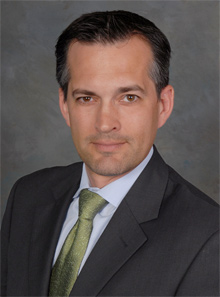 The advice of Aaron Barr, CEO of HBGary Federal, to fellow cybersecurity professionals: 'Roll up your sleeves and get your hands dirty.' On the Saturday before last, an article appeared in Financial Times in which a certain Aaron Barr, head of US federal contractor HBGary Federal, claimed to have identified by name what he termed Anonymous's "leadership". We responded with a press release conceding defeat. The next day, our hackers infiltrated Barr's personal data as well as that of HBGary Federal and its parent company HBGary, thereafter releasing tens of thousands of company emails, as well as the very document that Barr had planned to sell to the FBI – a document that turned out to be both hilariously inaccurate and not-so-hilariously destined to get some undetermined number of innocents raided by government agents, despite them not having any connection to Anonymous whatsoever. We then released all of these materials ourselves, and in doing so revealed documents that included plans to collect information on the family members of political opponents of the US Chamber of Commerce, as well as a proposal to attack WikiLeaks and key supporter Glenn Greenwald by means of a range of unethical and possibly illegal tactics now being reported by media outlets world wide.
This farrago of embarrassments doesn't end there: shortly after the attack, I spoke to Barr via phone (the conversation is on record), during which the clearance-possessing federal contractor made misleading statements to me about his intentions in collecting information about activists who were meanwhile involved in providing assistance to pro-democracy campaigners in Tunisia, Egypt and elsewhere. Later, as we and reporters went through the acquired emails and other data, we began to discover the full extent of the plans for surveillance and dirty tricks. We were left with an abiding sense of the sickness that plagues institutions that already spend millions on public relations lest they be considered on their merits.
As the story unfolds, Anonymous will continue to conduct the investigation that, in a more perfect world, would be immediately pursued by law enforcement agencies. Anonymous will likewise continue to work with the press and independent observers to reveal the truth of what US taxpayer dollars and corporate "emergency response" funds actually go to produce. Meanwhile, our opponents and antagonists will continue to lie to you. All we ask is that you compare our words and actions with theirs, and decide which of these two factions your conscience would prompt you to support.
The advice of Aaron Barr, CEO of HBGary Federal, to fellow cybersecurity professionals: 'Roll up your sleeves and get your hands dirty.' On the Saturday before last, an article appeared in Financial Times in which a certain Aaron Barr, head of US federal contractor HBGary Federal, claimed to have identified by name what he termed Anonymous's "leadership". We responded with a press release conceding defeat. The next day, our hackers infiltrated Barr's personal data as well as that of HBGary Federal and its parent company HBGary, thereafter releasing tens of thousands of company emails, as well as the very document that Barr had planned to sell to the FBI – a document that turned out to be both hilariously inaccurate and not-so-hilariously destined to get some undetermined number of innocents raided by government agents, despite them not having any connection to Anonymous whatsoever. We then released all of these materials ourselves, and in doing so revealed documents that included plans to collect information on the family members of political opponents of the US Chamber of Commerce, as well as a proposal to attack WikiLeaks and key supporter Glenn Greenwald by means of a range of unethical and possibly illegal tactics now being reported by media outlets world wide.
This farrago of embarrassments doesn't end there: shortly after the attack, I spoke to Barr via phone (the conversation is on record), during which the clearance-possessing federal contractor made misleading statements to me about his intentions in collecting information about activists who were meanwhile involved in providing assistance to pro-democracy campaigners in Tunisia, Egypt and elsewhere. Later, as we and reporters went through the acquired emails and other data, we began to discover the full extent of the plans for surveillance and dirty tricks. We were left with an abiding sense of the sickness that plagues institutions that already spend millions on public relations lest they be considered on their merits.
As the story unfolds, Anonymous will continue to conduct the investigation that, in a more perfect world, would be immediately pursued by law enforcement agencies. Anonymous will likewise continue to work with the press and independent observers to reveal the truth of what US taxpayer dollars and corporate "emergency response" funds actually go to produce. Meanwhile, our opponents and antagonists will continue to lie to you. All we ask is that you compare our words and actions with theirs, and decide which of these two factions your conscience would prompt you to support.


